Do you need a website redesign or just a few fixes
A full rebuild isn't always the answer, and it's usually the more expensive one. Here's how to tell which situation you're actually in.


If you can name the specific problems with your website, you need fixes, not a redesign.
Most owners arrive at “it needs a redesign” from a feeling rather than a list. Enquiries have gone quiet, a competitor’s site looks sharper, and a rebuild feels like the clean reset. Sometimes that is exactly right, and sometimes it is the dearest possible way to fix four small things.
Below are the symptoms that mean fixes, the ones that honestly mean a rebuild, and the middle option most people never get quoted for. After that, what each path costs you in time and hassle. At the end there is a test you can run this afternoon with your own phone.
What people mean when they say redesign
Most of the time, “redesign” is shorthand for “this is not working and I cannot tell which part”. That is a diagnosis problem before it is a build problem.
It helps to split the word into two different jobs. Fixes change what the site says and how it behaves. A rebuild changes what the site is made of.
- Wording, headings, calls to action
- Phone number placement and click-to-call
- Photos, reviews, proof you are real
- Image and script speed work
- Adding or splitting service pages
- Tracking so you can see enquiries
- New platform or builder
- New page structure and menus
- New design system and templates
- New page addresses plus redirects
- Content moved or rewritten wholesale
- Fresh hosting, email and tracking setup
Most sites that feel wrong only need the left column. The expensive mistake is buying the right column to get it.
The symptoms that point to fixes
If the site loads, works on a phone, and roughly says what you do, nearly every complaint you have is a fix. These are days of work rather than weeks, and none of them touch the foundation.
Here is the list worth handing to someone and having sorted this month:
- The phone number is hard to find, or it is not tappable on a mobile.
- No clear next step anywhere. Nobody tells the visitor to call, book or ask for a price.
- The services you actually make money from get one line, or are missing.
- No reviews, no photos of real work, no licence numbers, nothing that proves you exist.
- Copy written about the business instead of the customer’s problem.
- Pages so slow that people leave before they see anything.
- No tracking, so nobody can say where enquiries come from.
Speed gets blamed on the build far more often than it deserves. Here is the honest answer. Most small business sites are slow because of oversized images and a pile of plugins, and both get fixed on the site you already have. Google publishes the measures it actually looks at in Core Web Vitals, which is worth checking before anyone quotes you for a rebuild. There is a longer walk through the quiet ones in five signs your website is costing you customers.
If your only evidence is "enquiries are down", put tracking on before you change anything. Otherwise you will never know which change worked, and you will be having this same conversation in a year. More on that in the one number most businesses never check.
The symptoms that mean a rebuild
A rebuild earns its money when the foundation is the problem, not the wording sitting on top of it. There are only a handful of honest reasons, and only one of them is about looks.
- It was never built for phones. Not a bit cramped, but pinch and zoom, desktop only. Google works from the mobile version of your pages, which it explains in its mobile-first indexing guidance, so this one caps everything else you try.
- The platform is dead. An abandoned builder, an unsupported theme, a version of PHP nobody will patch. Security stops being optional at that point.
- Nobody can edit it. The developer has gone, there is no login, or every text change needs code.
- The business has moved on. New services, a new area, a different type of customer. Rewording the pages will not fix a structure built for the business you used to run.
- It has been patched into a corner. Every change breaks something else, so quotes keep coming back higher than the work sounds.
- You do not really own it. The site sits inside something you rent, with no way to export it.
One more that people do not like hearing. An old design is not a reason on its own. A design that makes people distrust you is, and the honest test is whether anyone outside your family would type their phone number into it.
The middle path nobody quotes for
Sometimes the right answer is neither. The same site, with real photos and content that matches what you sell now, can change the phone more than a new design does.
This usually looks like:
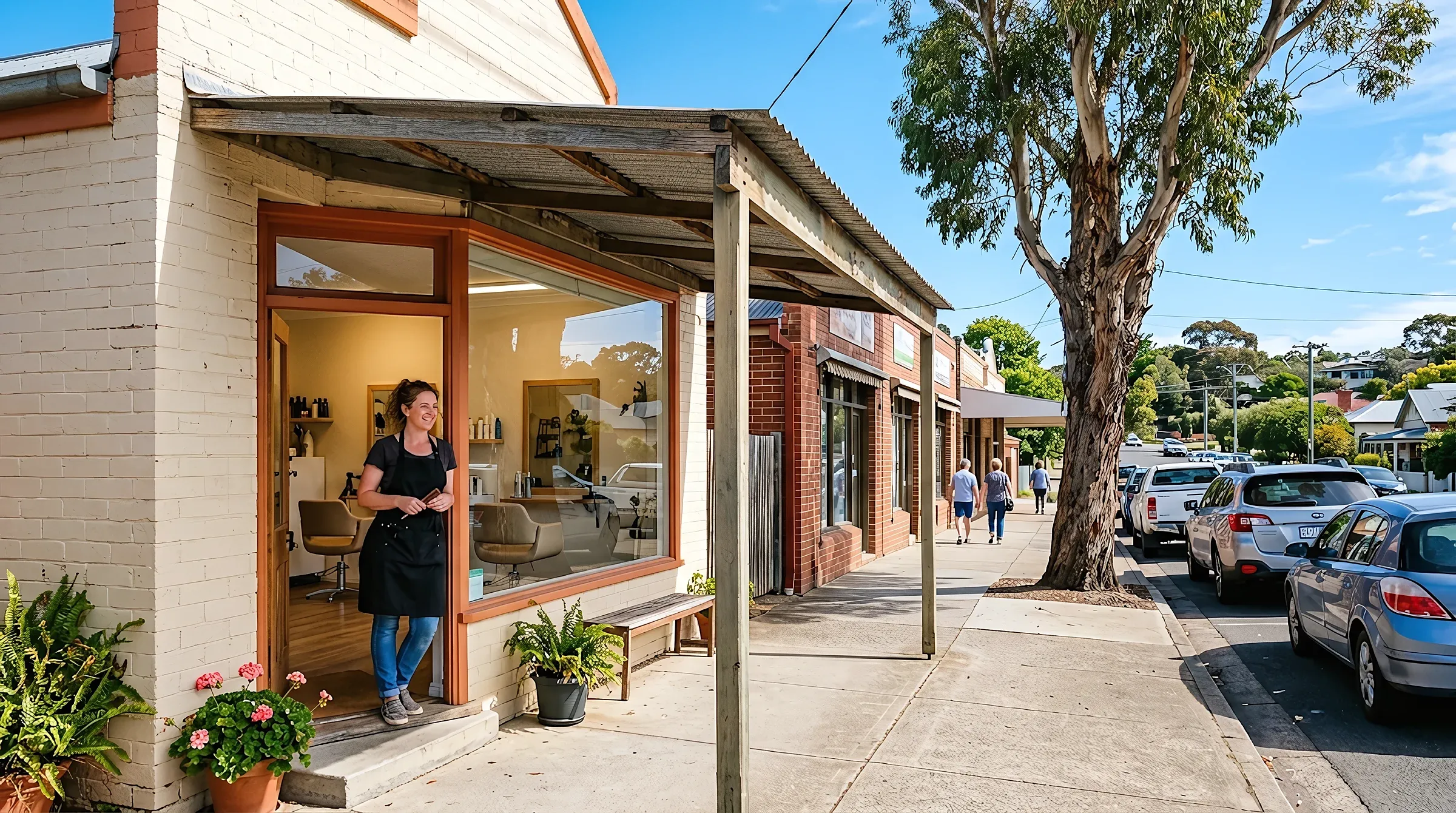
- A proper set of photos of your work, your team and your van or shopfront.
- One page for each service you sell, instead of one page listing all of them.
- A home page rewritten to say what you do, where you do it, and what to do next.
- Small structural moves. Menu order, a location page or two, prices or an FAQ block.
- Dead pages deleted rather than dragged into a rebuild.
The clearest version of this is a trade or a clinic selling six things off one Services page. Split it into six pages, put a real photo and a price range on each, and the site finally has something to show the person searching for that one job.
The reason this path works is simple. Visitors read the content and barely register the build, and most small business sites lose people on the words long before the design gets a chance to matter.
What each path costs in time and disruption
Fixes are cheap and invisible. A rebuild costs real money, takes weeks of your attention, and carries one risk that fixes do not. You can go backwards in Google.
| Path | Typical time | Disruption to you | When it is the right call |
|---|---|---|---|
| Targeted fixes | Days, sometimes a week | Almost none. Site stays live, changes land as they are done | You can name the problems, and the site works on a phone |
| New content and photos | Two to four weeks | A photo shoot and a few rounds of approvals | The site is sound but says the wrong things, or says them thinly |
| Full rebuild | Four to eight weeks | Heavy. Decisions, approvals, content gathering, a launch window | The platform, the mobile experience or the structure is the problem |
Money follows the same shape. Across the market a proper small business rebuild often starts from a couple of thousand dollars and rises quickly once photography, copywriting or an online shop come into it, while fixes are billed in hours. Some providers, including us, spread the whole thing into a monthly plan instead of one bill, which is worth asking about before you decide the rebuild is out of reach.
The risk that actually bites in a rebuild is page addresses changing with nothing pointing the old ones at the new ones. Ask for the redirect map before launch day, and check your busiest pages afterwards. Google sets out how to handle this in its site move guidance.
How to decide in an afternoon
One question settles most of it. Can you write down the biggest problems with your site in plain words that a stranger would understand?
If you are unsure which side you are on, do this with your own phone in your hand rather than a laptop:
- Open your site on mobile data, not the wi-fi in your office, and count the seconds.
- Try to find your own phone number in under five seconds, then tap it.
- Search for one service you sell and see whether the site has a page for it.
- Ask someone who does not know your business what you do and where, from the home page alone.
Anything that fails those four is a fix with a name on it. If all four pass and the phone still is not ringing, the problem is probably that nobody is finding the site at all, which is a different job again. There is more on that in why your business isn’t showing up on Google.
What to do first
Write the list. Before you get a single quote, put the problems on paper in the order they cost you work, because every conversation after that gets cheaper and shorter.
- Name the three problems that bother you most, in plain words
- Check the site on your own phone, on mobile data
- Get tracking on so you can see enquiries, not guesses
- Ask whether each problem is content, behaviour or foundation
- Only then ask anyone for a price
If the list turns out to be fixes, get them done and keep your money. If it turns out to be the foundation, pay for the rebuild once and do it properly. We handle both inside a monthly plan, so the same work runs whether it is a rewrite or a ten-page site with your Google listing sorted, and you can see how that is priced on the pricing page.
Frequently asked questions
How do I know if my website needs a redesign or just an update?
Try to write down the three biggest problems in plain words. If you can name them, they are almost certainly fixes. If the only thing you can say is that the whole site feels wrong, the structure is the problem and a rebuild is the honest answer.
Is it cheaper to fix my website or start again?
Fixing is nearly always cheaper up front, because you are paying for hours rather than a new build. Starting again is cheaper over a few years when the site sits on a dead platform and every small change turns into a fight.
How much does a website redesign cost for a small business in Australia?
Across the market a proper small business rebuild often starts from a couple of thousand dollars and climbs once photography, copywriting and online shop features are added. Some providers spread the same work into a monthly plan instead of one large bill.
Will a new website hurt my Google rankings?
It can, and the usual cause is page addresses changing with nothing pointing the old ones at the new ones. Ask for a redirect map before the new site goes live, and check that your key pages still load after launch.
Can I keep my website and just change the content and photos?
Yes, and this is the option most people never get quoted for. New photos, a page for each service and a rewritten home page often move the phone more than a new design does.
How long does a website rebuild take?
Most small business rebuilds run four to eight weeks, and the building is rarely what holds it up. The wait is on photos, copy approvals and the answers only the owner can give.
My website is slow. Does that mean I need a new one?
Usually not. Slow pages on a small business site are normally oversized images and too many plugins, and both are fixable on the site you already have.
What should I do before I pay anyone for a redesign?
Get tracking on the site so you can see where enquiries come from, then sit on that for a few weeks. Without it you cannot tell whether the new site worked, only whether you like it more.